Five-Axis CNC Machining: What It Actually Buys You
What "five-axis" really means
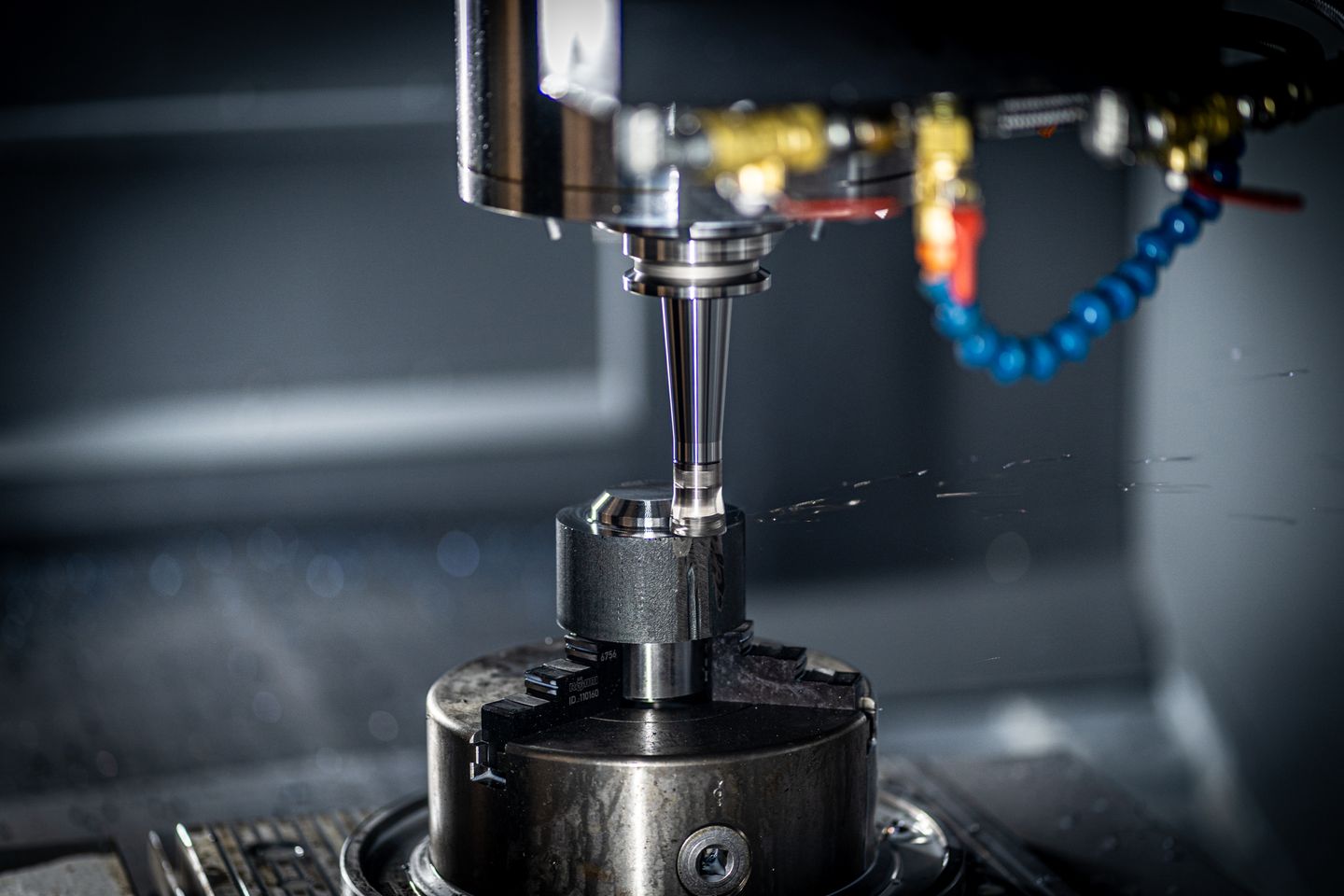
A five-axis CNC machine moves the cutting tool (or the table) along the three linear axes X, Y and Z and rotates the part around two additional axes - usually A and B, or A and C. The practical difference from a familiar 3-axis machine is that the spindle can approach the part from almost any angle without anyone unclamping it. There are two flavours, and mixing them up is the most common source of a bad quote. Indexed (3+2) machining locks the part at a fixed tilt, then cuts with normal 3-axis moves across that one face orientation; it is cheaper, faster to program, and covers most multi-face parts. Simultaneous five-axis moves all five axes at once to follow a compound curve - that is what turbine blades and impellers need, and it is genuinely more expensive in both programming and machine-hour terms. Knowing which mode your part actually requires is the first step to a quote that is not padded with simultaneous work you never needed.
Indexed versus simultaneous, in plain terms
Think of indexed work as "machine one tilt angle, then the next, then the next" - the part is stationary during each cut. Simultaneous work is "the part keeps rotating while the tool keeps cutting." Indexed work still needs the extra rotary axes to reach awkward faces, but it does not need the controller and CAM to coordinate all axes continuously. That distinction matters because a shop that quotes simultaneous when indexed would do is charging you for the hardest mode on every feature; a shop that quotes indexed when a surface is truly contoured is quietly promising a finish it cannot deliver. The honest question to ask is not "do you have 5-axis?" but "which of my features actually need simultaneous motion, and which are fine indexed at a third of the cost?"
Where it pays for itself
The headline benefit is fewer setups. A bracket that needs five faces machined on a 3-axis machine is loaded, indicated, clamped and unclamped five times; each handling is a chance to introduce a datum shift. On a 5-axis machine the same part is fixtured once and rotated into position, so the faces stay referenced to a single coordinate system. That single change is why 5-axis work routinely holds tighter positional tolerances across faces than any number of 3-axis setups can. For assemblies where three faces must line up within a few hundredths of a millimetre, the 5-axis approach is not a luxury - it is the only way to hit the print without custom fixturing on every operation.
Complex geometry and compound angles
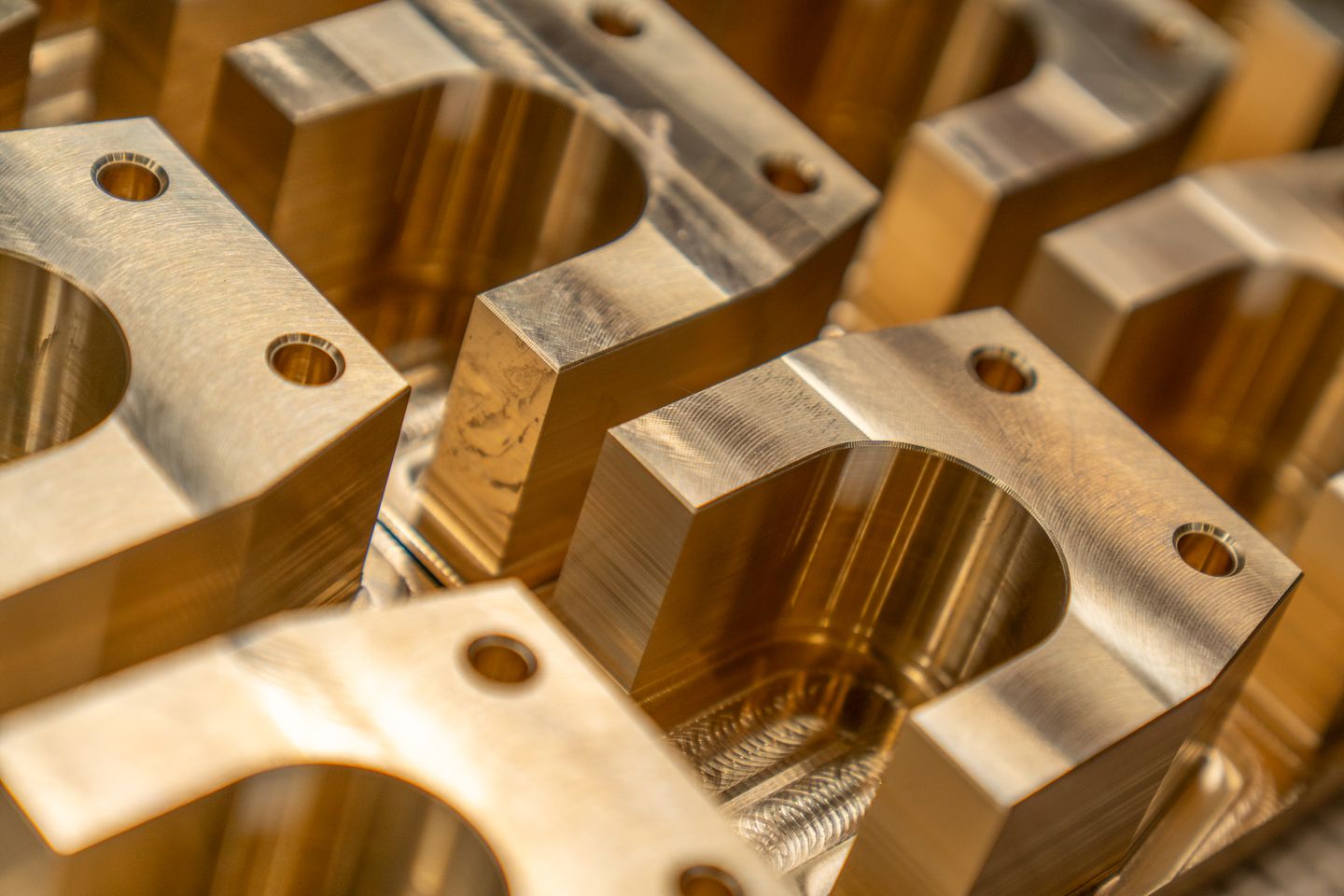
Turbine blades, impellers, bone screws, manifold bodies and any part with angled holes or contoured sweeps are the natural fit. Drilling a hole at 35 degrees to a face is a one-line operation when the machine can tilt to it; on a 3-axis machine it needs a custom angled fixture and a separate setup. If you are designing parts with compound angles, five-axis CNC machining is usually the shortest path from CAD to a good part. The same principle shows up in joining: shops that publish laser welding of thin sheet-metal assemblies keep the beam normal to the joint for the same reason - control of the approach angle is what keeps the result straight. And where the joint is a precision weld rather than a cut, a laser-welding specialist such as TrueSyn Robotic applies the same angle-control discipline to multi-axis weld paths.
Surface finish on contoured faces
Because the tool can stay normal (perpendicular) to the surface as it moves, a 5-axis pass leaves a more even finish on curved faces than a 3-axis raster, which always attacks the curve at a changing angle. For mould surfaces and aerodynamic shapes this often removes a polishing step. The finish improvement is not cosmetic only - on a sealing face or a slip surface, an even finish is a functional requirement, and achieving it by machining instead of hand-finishing is repeatable part to part. The repeatability is the real selling point: a hand-polished surface varies with the operator, while a machined one varies with the toolpath, which you can store and re-run.
Fixturing: the hidden cost lever nobody puts on the quote
The rotary axes get the headlines, but the fixture is what decides whether 5-axis saves you money. A part that needs a heavy, hard-to-reach vice or a bespoke tombstone fixture can eat the entire setup saving. The best 5-axis candidates are parts that clamp simply on one side and then just need to be rotated. When you send a print, flag the clamping faces explicitly and ask the shop to quote the fixture alongside the part - a fixture quoted separately is a fixture you can reuse and amortise, while a fixture buried in the part price is a cost you pay again next time. If the part is thin or flexible, ask how they will prevent deflection, because a beautifully angled toolpath on a part that moves under load produces a beautifully angled scrap part.
Tool length and rigidity
Five-axis lets the tool approach steep walls at a shallow angle, which means shorter stick-out and a stiffer cut. That is why 5-axis work often runs faster feeds than the equivalent 3-axis attempt at the same wall, where the tool has to reach in sideways with a long, whippy extension. Shorter tools also hold tolerance better and break less. When you compare quotes, the tooling strategy is worth asking about directly: a shop that reaches the feature with a short tool is both faster and more accurate than one forced into a long-reach tool by a poor fixture choice. This is exactly the kind of detail that separates a process chosen to match the part from a process chosen because it was already set up.
What it does NOT magically fix
Five axes do not make a soft material rigid, and they do not remove the need for a sane fixture. Thin-walled parts still chatter if the tool pressure is wrong, and a bad first-op datum will be faithfully carried through every rotation. The machine earns its keep only when the part is actually 5-axis-shaped; bolting a flat plate to a 5-axis table and calling it "advanced" just costs more. The honest question to ask your shop is not "do you have 5-axis?" but "which of my features actually need it, and which are fine on 3-axis at a third of the cost?" A shop that answers that without defensiveness is one you can trust with the rest of the build.
Comparing quotes
When you request a CNC machining quote, ask whether the shop is pricing indexed or simultaneous work, because the programming and machine-hour cost are not the same. A supplier that explains which mode your part needs - rather than quoting the most expensive option by default - is the one you can trust with the rest of the build. This is the same discipline we apply across six manufacturing processes under one roof: the process is chosen to match the part, not the other way around. Ask for the quoted tolerance on each feature, not a single blanket number, because the mode and the tolerance are linked.
Design tips that keep cost down
Keep the deepest undercut shallow, avoid features that only a simultaneous move can reach if an indexed move would do, and let the supplier know the real tolerance that matters - not a blanket "plus/minus 0.01 on everything", which forces the most expensive process everywhere. If you are also evaluating laser-based joining, our write-up on multi-axis CNC laser welding workstations covers the selection logic in the same spirit: specify the function, let the process follow. A short design review before the first cut is worth more than a perfect tolerance on a feature that does nothing. And standardise clamping features across a family of parts so one fixture serves ten parts instead of ten fixtures serving ten parts.
How to brief a shop so you get a real number
Send the STEP model, the 2D drawing with the true critical dimensions called out, the material and temper, the quantities (including the realistic ramp), and the finish requirement. State which tolerances are functional and which are just "nice to have." Shops quote from what you send; if you send a drawing with every box ticked tight, you will be quoted the most expensive process on every feature. The single most useful thing a buyer can do is separate "must hold" from "would be nice" on the print before it goes out for quote. The shops that ask you to do this are doing you a favour - they are protecting you from your own over-specification.
A buyer's checklist
| Question | If yes, 5-axis helps | If no, 3-axis is fine |
|---|---|---|
| Does the part need 3+ faces within tight positional tolerance? | Yes - one setup keeps the datum | Single-face parts do not benefit |
| Are there compound-angle holes or contours? | Yes - tilt avoids fixtures | Standard holes are cheaper on 3-axis |
| Is the surface a sealing or slip face needing even finish? | Yes - normal toolpath helps | Hidden faces can be rougher |
| Is the clamping face simple and accessible? | Yes - fixture stays cheap | Hard-to-clamp parts eat the saving |
| Is volume low and the shape simple? | No - cost outweighs benefit | 3-axis is the better buy |
FAQ
Is 5-axis always better than 3-axis? No. For flat plates, simple pockets and single-face parts, 3-axis is faster and cheaper. Use 5-axis when multi-face accuracy, compound angles or contoured finish actually matter.
Does it need special CAD? The model must be a proper 3D solid; the post-processor and CAM software handle the toolpath. A clean model is the real prerequisite, not a special file format.
What tolerance can I expect? That depends on material, fixture and feature, not on the axis count alone. The win from 5-axis is consistency across faces, which is what lets tight stack-ups hold.
Will it remove my polishing step? Often, on contoured faces - but confirm with the shop, because some geometries still need a final hand or media finish.
Should I ask for the fixture price separately? Yes. A separately quoted, reusable fixture is a cost you amortise; a fixture buried in the part price is one you pay again next time.
Common misconceptions about five-axis
Three ideas cause most bad buying. First, that 5-axis automatically means "more precise" - it does not; it means "consistent across faces," which is different, and a sloppy fixture on a 5-axis machine is still a sloppy part. Second, that you should always buy simultaneous - indexed work is cheaper and right for most parts, and paying for simultaneous on a part that only needed indexed is money spent on a demo, not a part. Third, that the machine count is the capability - the real capability is the shop's ability to fixture, program and verify the part, and a modest machine in a disciplined shop beats a flagship machine in a chaotic one. Judge the shop, not the brochure.
The programming cost nobody mentions
Five-axis programming is genuinely harder than 3-axis, and that cost sits in the quote whether you notice it or not. A good CAM programmer spends time on collision checking, tool-axis limits and tilt strategies that a 3-axis job never needs. The saving comes back only when fewer setups and better finishes offset that programming time - which is why simple parts do not benefit. When you compare quotes, ask whether the programming is a one-off amortised across your repeat orders or re-quoted every time; a shop that keeps your proven program on file turns the programming cost into a sunk cost, and your second and third orders get cheaper for it. That is a quieter advantage than any axis count.
Standards and references. ASME Y14.5; ASTM International; Engineering tolerance


评论
发表评论