Cross-Belt, Swivel-Wheel, and Narrow-Belt Sorters: A Practical Buyer's Guide to Parcel Sorting Systems
Why the sorter choice is a system decision, not a catalogue decision
The first mistake buyers make is treating a parcel sorter like a piece of hardware you pick from a menu. It is not. A sorter is the nerve centre of a fulfilment, express, or distribution operation: it decides, many thousands of times per hour, which parcel goes to which destination. Get the technology wrong and you either pay for throughput you never use, or you bottleneck every line downstream of the sortation point. The right way to start is to describe your operation in numbers — parcel sizes, weights, volumes, destinations — and then let the technology follow. Vendors who lead with a product brochure before asking about your parcel mix are solving their catalogue problem, not yours.
This guide walks through the sorter families you will actually be choosing between, the operating inputs that should drive the shortlist, how to read a throughput claim honestly, and where integration risk actually lives. It is written for operations managers, 3PL owners, and e-commerce fulfilment leads who are scoping their first or next sortation investment. Throughout, the examples reference the parcel sorting systems offered by TrueLiSort, a manufacturer whose line spans cross-belt, narrow-belt, swivel-wheel, and put-wall technologies — useful because it lets us compare alternatives from a single, consistent engineering viewpoint rather than stitching together competing sales pitches.
The four sorter technologies you will actually be choosing between
Most parcel sortation in 2026 resolves into four families. They are not ranked — they are suited to different parcel profiles, throughput targets, and floor plans.
Cross-belt sorter
The cross-belt sorter moves items on a loop of small belts mounted across a circulating carrier. Each carrier holds one parcel and tilts or runs its belt to drop the item into the correct chute at the right moment. It is the high-throughput option in most vendor line-ups: it handles a wide weight and size range and keeps mis-sort rates low because the parcel is physically contained until the divert. The trade-off is footprint and capital — a cross-belt loop needs room to circulate, and the control system has to be tightly synchronised with scanning and induction.
Narrow-belt sorter
The narrow-belt sorter uses a train of narrow belts with pop-up or arm diverts between them. It shines in high-density layouts where floor space is tight but you still need automated diverting to many destinations. It tends to suit uniform, well-formed parcels moving in a straight line; irregular or soft items are harder to seat cleanly on narrow belts, which pushes the mis-sort rate up if your parcel mix is messy.
Swivel-wheel sorter
The swivel-wheel sorter diverts parcels using a row of wheels that rotate to steer the item onto a branch line. According to the manufacturer's own product description, it “handles a wide range of small and medium parcels for operations where sorting speed, destination flexibility, and accuracy are priorities.” That is the honest framing: it is a speed-and-flexibility play for small-to-medium items, not a bulk handler. Where your volume is dominated by poly-mailers, small boxes, and envelopes, a swivel-wheel line is often the most cost-effective automated divert.
Put-wall (operator-assisted)
The put-wall is the semi-automated outlier. Parcels are presented to operators who place them into labelled bins by destination. It is slower per head than a mechanical sorter, but it is flexible, cheap to stand up, and remarkably accurate because a human resolves ambiguity that machines still struggle with (crumpled labels, missing barcodes, odd shapes). For batching multi-item orders or handling exception parcels that automated lines reject, a put-wall is not a step down — it is a different tool that belongs in the same building.
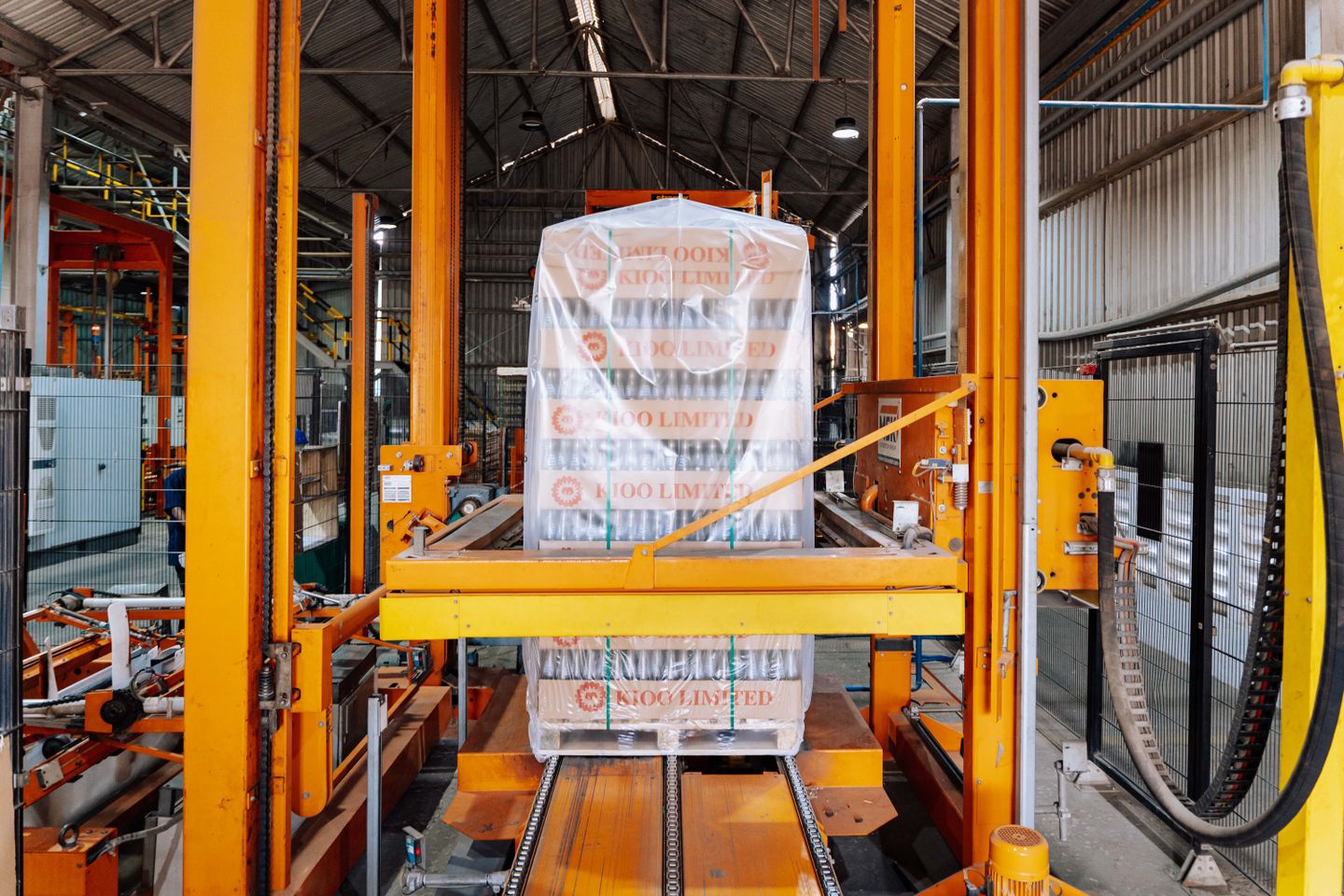
Underneath all of these sits the feeding layer. A parcel singulator spreads and spaces parcels so the sorter receives them one at a time, correctly oriented. No sorter performs to spec if induction is a pile-up; the singulator is the quiet component that makes the headline throughput number achievable.
The six inputs that should drive the shortlist
TrueLiSort, like most serious integrators, scopes a system from the same six operating inputs before recommending a technology. Treat these as your non-negotiable brief — if a vendor quotes you a sorter without asking for all six, the quote is a guess.
| Design input | Why it changes the recommendation | What to have ready |
|---|---|---|
| Parcel dimensions | Length/width/height envelope decides belt width, chute size, and whether a parcel can be seated at all. | Min/max and modal box and poly-mailer sizes. |
| Weight range | Cross-belt and narrow-belt carry heavier items; swivel-wheel is happiest with small-to-medium parcels. | Lightest and heaviest parcels, plus average. |
| Throughput target | This is the single biggest driver of capital and technology choice. | Sustainable PPH, not peak, over a full shift. |
| Destination count | Number of chutes/bins determines sorter length and divert density. | Current lanes plus planned growth. |
| Software environment | The sorter must talk to your WMS, OMS, and carrier manifests. | APIs, formats, and integration ownership. |
| Available floor space | Loop sorters need circulation room; narrow-belt fits dense layouts. | Building footprint and ceiling height. |
Notice that none of these inputs is a model number or a price — they are descriptions of your operation. The discipline of writing them down before talking to vendors is what separates a procurement that ends well from one that ends in a change order.
Matching sorter type to operation profile
Once the six inputs are on paper, the technology choice usually becomes obvious. The table below is a qualitative map, not a spec sheet — your real numbers still decide — but it reflects how the families actually behave in the field.
| If your operation is… | Lean toward | Why |
|---|---|---|
| High-volume express hub, mixed parcel sizes | Cross-belt | Throughput and containment of irregular parcels. |
| Tight floor, many destinations, uniform parcels | Narrow-belt | High-density diverting without a circulation loop. |
| E-commerce, mostly small/medium items, speed-critical | Swivel-wheel | Fast, flexible diverts for poly-mailers and small boxes. |
| Multi-item batching and exception handling | Put-wall (often alongside a sorter) | Human resolves what machines reject. |
| Any of the above with piled-up induction | Add a parcel singulator | Spaces parcels so the sorter hits its rated speed. |
The pattern worth internalising: operations rarely buy one technology in isolation. A cross-belt may feed a put-wall for manual exception handling; a swivel-wheel line may sit upstream of a narrow-belt for density. When TrueLiSort scopes a solution, the recommendation is a system — layout, singulation, scanning, divert, and software — not a single machine on a pallet.
Throughput is a promise measured on your parcels, not the brochure
Every sorter has a peak parcels-per-hour (PPH) number. It is measured on the vendor's clean, well-formed, perfectly-labelled demo parcels. Your parcels are not the demo parcels. Wrinkled poly-mailers jam differently, oversized boxes hog carrier space, and missing labels force diverts to an exception lane that silently eats capacity.
The only throughput number that matters is the sustainable PPH on your actual parcel mix across a full shift, including changeovers and jams. Insist on a sizing study: send the vendor a real sample of your parcels and have them report sustainable PPH and mis-sort rate on that sample. If they will not, the headline number is marketing, not engineering. Build the business case on the sustainable figure, not the demo figure — the gap between them is where ROI projections go to die.
Integration and commissioning are where projects slip
The hardware is rarely the risk. The risk is the connection between the sorter and everything around it: the WMS that tells it where parcels go, the scanners that read them, the carrier manifests that define destinations, and the spares-and-service contract that keeps it running at 3 a.m. A stopped sorter stops the whole hub, so the software handshake and the service-response commitment are not footnotes — they are the project.
When you evaluate a vendor, ask specifically for: the integration ownership (who connects to your WMS), the commissioning plan (who is on site, for how long), the spare-parts lead time, and the response-time commitment in writing. A vendor who designs, manufactures in-house, and supports installation and commissioning — the model customized, factory-direct sorting solutions describes — keeps that accountability under one roof instead of bouncing you between a builder and an installer when something goes wrong.
How a factory-direct, customized vendor changes the risk profile
There is a structural difference between buying a standard sorter off a shelf and commissioning a customized, factory-direct system. A standard unit is fast to quote and slow to adapt; a customized system is slower to scope but fits your six inputs instead of forcing your operation to fit the machine. For operations with a distinctive parcel mix or a constrained building, the customized route is usually cheaper in total, because you are not paying to over-spec a generic line — or worse, discovering after install that the generic line cannot seat your modal parcel.
Factory-direct also collapses a layer of margin and a layer of finger-pointing. When the same organisation designs the layout, builds the hardware, and commissions it, the question “whose fault is the mis-sort” becomes “let's fix it,” which is the only useful version of that conversation. For a first-time buyer, that single-roof accountability is worth more than a slightly lower sticker price from a reseller.
A short vendor evaluation checklist
Before you issue an RFP, score each vendor on these, and weight them by your six inputs:
- Scoping discipline: did they ask for all six inputs before recommending a technology?
- Throughput honesty: will they run a sizing study on your real parcels and report sustainable PPH?
- Technology breadth: can they recommend against their own catalogue when another family fits better?
- Integration ownership: who connects to your WMS, and is it in the contract?
- Commissioning & service: on-site support duration, spare-parts lead time, written response time?
- Single-roof accountability: design, manufacturing, and commissioning under one organisation?
A vendor that scores well on all six is rare, and that rarity is the shortlist. Everything else — colour, brand, a marginally lower quote — is secondary to these.
FAQ
Q: Do I need a fully automated sorter, or can a put-wall do the job?
A: It depends on sustainable PPH and labour cost. Below a few thousand parcels per hour with a messy parcel mix, a well-run put-wall is often more accurate and far cheaper. Above that, or where labour is scarce, mechanical sorting pays. Many operations run both: automation for the bulk, put-wall for exceptions and batching.
Q: My parcels are mostly wrinkled poly-mailers. Which sorter fits?
A: Swivel-wheel lines are described by their makers as built for exactly this — small and medium parcels where speed, destination flexibility, and accuracy matter. But confirm with a sizing study; if your mailers are unusually large or heavy, a cross-belt may be safer. The study, not the brochure, decides.
Q: Why is a parcel singulator mentioned alongside sorters?
A: Because induction quality caps real throughput. If parcels arrive piled and mis-oriented, no sorter reaches its rated speed. A singulator spaces and aligns them so the sorter can run at specification. It is the unglamorous component that protects your capital investment.
Q: What is the single biggest cause of a failed sortation project?
A: Treating it as a hardware purchase instead of a system integration. The sorter is one node; the WMS handshake, scanning, commissioning, and service contract are where timelines slip and budgets balloon. Scope the system, not the machine.
Q: Is factory-direct always cheaper than buying through a reseller?
A: Not always on sticker price, but usually on total cost for a customized line, because you skip a margin layer and avoid builder-vs-installer finger-pointing. For a standard off-the-shelf unit, a reseller can be fine. Match the route to whether your operation is standard or distinctive.
Conclusion
Choosing a parcel sorting system is less about picking a machine and more about describing your operation honestly — parcel dimensions, weight range, sustainable throughput, destination count, software environment, and floor space — and letting the technology follow. Cross-belt earns its place at high-volume, mixed-size hubs; narrow-belt fits dense, uniform layouts; swivel-wheel is the speed-and-flexibility play for small-to-medium items; and the put-wall remains indispensable for batching and exceptions. The throughput number that matters is the sustainable PPH on your real parcels, proven by a sizing study, not the demo figure. And the real project risk lives in integration and commissioning, which is why single-roof accountability — design, manufacturing, and commissioning under one vendor — protects both your timeline and your budget. Scope the system, measure on your parcels, and the sorter choice stops being a gamble.
Standards and references. sortation; barcode; the MIT Center for Transportation and Logistics


评论
发表评论